
Black Tot Day: The Morning the Navy Went Dry

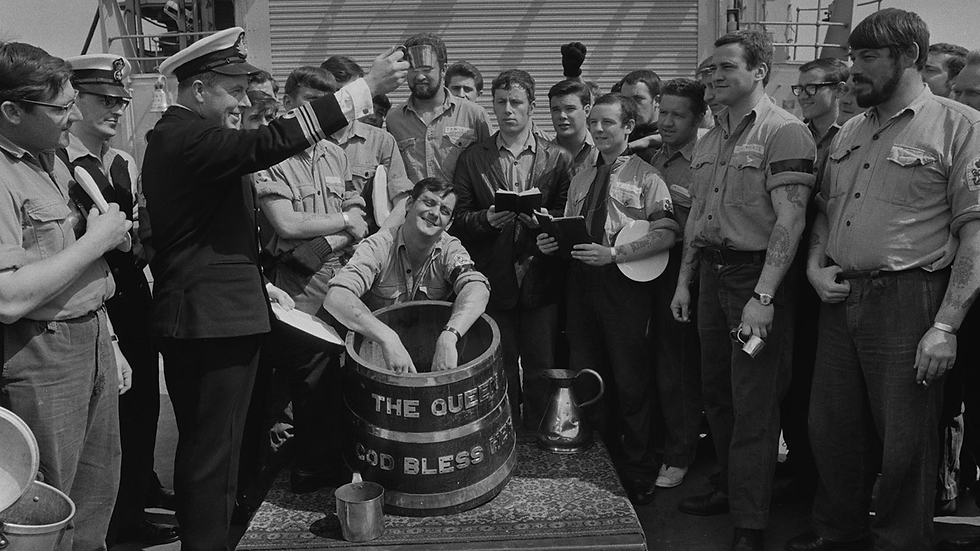
At six bells in the forenoon watch — eleven o'clock in the morning, to those of us who don't run our lives by ship's bells — the pipe went out across the fleet for the very last time: "Up Spirits." It was 31 July 1970, and after more than three centuries, the Royal Navy's daily rum ration was about to disappear for good.
Sailors marked the moment in their own ways. Some wore black armbands. Others staged mock funerals, lowering their tots over the ship's side as if burying an old shipmate. It was affectionate mockery, but there was real feeling behind it — a tradition older than the Navy's steam engines was being switched off, and everybody knew it.
The story of the tot goes back to 1655, when the Royal Navy began issuing rum to sailors in place of the beer that had previously formed part of their daily rations — beer being bulky, and rum, freshly available from Britain's Caribbean territories, considerably less so. By 1731 the ration had been formalised at half a pint of neat rum a day, an amount that would floor most of us before lunch. In 1740, Admiral Edward Vernon — nicknamed "Old Grogram" for the grogram cloak he wore on deck, which gave us the word "grog" — ordered that the ration be diluted with water, partly to curb drunkenness and partly, one suspects, to make the barrels last longer. Over the following two centuries the ration shrank steadily, from half a pint to a quarter, and finally to a modest eighth of a pint — about 71 millilitres — issued at midday to every rating who wanted it.
By the late 1960s, though, the Navy had a problem. Its ships were no longer wooden walls bristling with cannon, worked by muscle and nerve; they were fast, complex, and increasingly automated, full of delicate machinery and demanding watch-keeping duties that didn't sit well with a daily dose of over-proof spirit. The case for keeping the tot rested almost entirely on sentiment. The case against it rested on safety. Safety won, and Parliament confirmed that 31 July 1970 would be the rum ration's last day.
In its place, the Admiralty offered compensation of a kind: senior rates could buy duty-free spirits in their messes, junior ratings were allowed three cans of beer a day, and a substantial sum — some £2.7 million, a considerable amount for the time — was set aside for a charitable fund benefiting sailors and Royal Marines, serving and retired, and their families. It was a practical, rather unromantic way to close a chapter that had shaped naval life since the days of sail.
Black Tot Day has never really gone away, though. Rum enthusiasts, naval associations and maritime communities the world over still mark it every 31 July, raising a glass to a tradition that, however impractical by modern standards, once meant camaraderie, comfort, and occasionally the difference between a bearable watch and a miserable one.
Here in Lynmouth, the Sailing Club and the Shanty Crew have taken to marking the day in their own way, with a feast of bacon and laver — that briny taste of the Bristol Channel's shores — followed by a few tots of rum in honour of the sailors who once relied on theirs. It's a modern custom rather than an old one, and we're happy to say so plainly: we haven't found any record connecting Lynmouth itself to the events of 1970. What we do have is a community that understands, better than most, why a small daily ritual could matter so much to people who spent their working lives at sea — and that's reason enough to keep raising a glass to it.
So next 31 July, if you're passing the harbour and catch the smell of bacon and something distinctly maritime in the air, you'll know why. Somewhere, a sailor from fifty-odd years ago would probably approve.


Comments